Best value
6 bottles
180-day supply
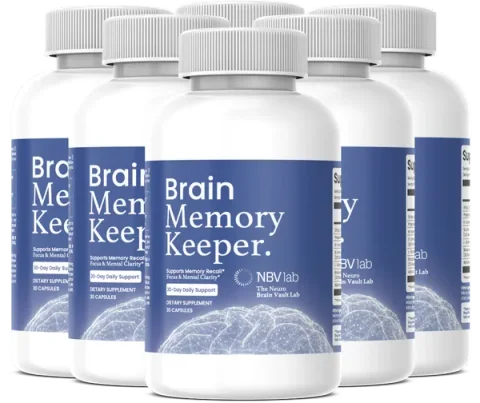
Regular $594, you save $300
$49 per bottle
$294 total, one-time payment
- Free US shipping
- 2 bonus e-books (digital)
- 60-day money-back guarantee
Secure checkout by BuyGoods
Brain health · Research review
Walking, learning something hard, eating the Mediterranean way, sleeping well, choline-rich foods and time with people. Here is what each study found, and what it did not.
Above: a presentation produced by NBV Labs, the maker of Brain Memory Keeper, a dietary supplement. It is an advertisement and its statements are the manufacturer's. Sound on.
The package options appear below the video once the presentation reaches them. The research summary continues underneath.
Brain Memory Keeper packages
Each order is a one-time payment on the retailer's secure checkout (BuyGoods). No subscription. Bonus e-books are digital downloads delivered by email.
Best value
180-day supply
Regular $594, you save $300
$49 per bottle
$294 total, one-time payment
Secure checkout by BuyGoods
Most popular
90-day supply
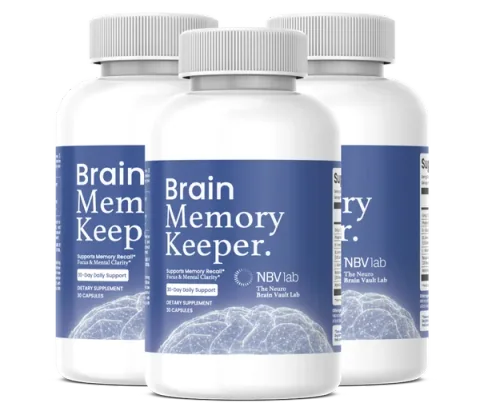
Regular $297, you save $120
$59 per bottle
$177 total, one-time payment
Secure checkout by BuyGoods
30-day supply
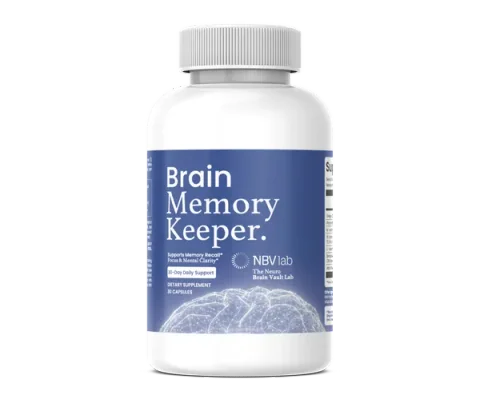
Regular $99, you save $30
$69 per bottle
$69 total, one-time payment
Secure checkout by BuyGoods
Use Brain Memory Keeper for up to 60 days. If you are not satisfied with the product or your results, contact the retailer within 60 days of purchase for a full refund of the purchase price, even on empty bottles. Refunds are handled by the retailer, BuyGoods, through its order lookup page (www.buygoods.com/orderlookup).
Orders ship from the retailer's US fulfillment center with tracking. The 3 and 6 bottle packages ship free in the US; the 1 bottle package adds $9.99 shipping. Orders are placed on the secure checkout of the retailer, BuyGoods. Prices and packages are set by the retailer and may change; shipping terms are shown on each package and at checkout.
Most people over 60 know the moment: a name that will not come, a room entered for a reason that has slipped away. Those lapses are common, and researchers have spent decades asking which everyday habits go along with a memory that holds up well. Six studies come up again and again. We went back to the original papers to see what each one actually measured.
In a trial published in PNAS, 120 older adults were randomly assigned to a walking program, three days a week for a year, or to a stretching and toning program. [1] MRI scans showed that the hippocampus, a brain region central to memory, grew by about 2 percent in the walking group, while it shrank slightly in the stretching group.
Both groups did better on a spatial memory test after the year. In the walking group, larger gains in hippocampal size went along with larger memory gains. [1]

The Synapse Project, published in Psychological Science, asked 221 adults aged 60 to 90 to spend about 15 hours a week for three months on an assigned activity. [2] Some learned demanding new skills, such as digital photography or quilting. Others spent the time on familiar, low-effort activities, such as socializing or listening to music.
The volunteers who learned demanding new skills showed larger improvements in episodic memory, the kind you use to recall events and details. [2] Being busy was not enough; the challenge seemed to matter.
The pattern across these studies is consistent: what you do with an ordinary week is connected to how your memory holds up. Very little of it is exotic, and most of it is free.
The Health Desk
In a randomized trial in Barcelona, 447 volunteers with an average age of about 67 followed one of three eating patterns for a median of about four years: a Mediterranean diet with extra olive oil, a Mediterranean diet with a daily handful of mixed nuts, or advice to follow a lower-fat diet. [3]
Memory scores were better in the nuts group than in the comparison group, and the olive oil group did better on tests of attention and planning. In the comparison group, scores drifted down over the same period. [3]
Back to the maker's presentationA study in Science looked at sleep in mice. [4] During sleep, the space between brain cells widened by about 60 percent, and waste molecules that build up while the brain is awake were cleared roughly twice as fast.
This was an animal study. It describes a mechanism and does not show the same effect in people. It is still a useful reminder that sleep is an active process, not just time off.
Choline is a nutrient found in eggs, fish, meat, beans and some vegetables. In the Framingham Offspring Cohort, researchers estimated the diets of 1,391 adults and gave them memory tests. [5] People who ate more choline around the time of testing tended to score better on verbal and visual memory.
This was an observational study. It shows a link between diet and test scores, not proof that choline caused the difference.

A review in Ageing Research Reviews pooled 19 long-term studies on social life and later health. [6] People with low social participation, infrequent contact with others or more loneliness were more likely to develop dementia during follow-up.
These studies show an association, not cause and effect. They do suggest that keeping in touch with friends and family belongs on the same list as walking and sleep.

Ordinary lapses tend to stay ordinary. Make an appointment if you, or the people close to you, notice any of these:
Several causes of memory trouble, such as medication side effects, low vitamin B12, thyroid problems or poor sleep, can be found at an ordinary check-up. A supplement is not a substitute for that visit. If you take medication, ask your doctor or pharmacist before starting any supplement. St. John's wort, one of the ingredients in the advertised formula, interacts with many medications, including antidepressants, blood thinners and birth control.
The video at the top of this page is produced by NBV Labs, the maker of Brain Memory Keeper, a dietary supplement. It explains the formula and the package options.
Watch the presentationThe presentation is an advertisement. A supplement is an addition to regular care, not a replacement for it.
Peer-reviewed studies cited in this report. Each link opens the PubMed record. Individual results may vary. The Vitality Dispatch is not affiliated with the authors, journals or institutions listed.
Randomized trial in 120 older adults: one year of walking increased hippocampal volume by about 2 percent compared with a stretching program; volume gains tracked memory gains.
Erickson KI, Voss MW, Prakash RS, et al. Exercise training increases size of hippocampus and improves memory. Proc Natl Acad Sci U S A. 2011;108(7):3017-3022. PubMed 21282661
Randomized study in 221 adults aged 60 to 90: three months of learning demanding new skills improved episodic memory more than low-demand activities.
Park DC, Lodi-Smith J, Drew L, et al. The impact of sustained engagement on cognitive function in older adults: the Synapse Project. Psychol Sci. 2014;25(1):103-112. PubMed 24214244
Randomized trial in 447 older volunteers followed for a median of about four years: the nuts group did better on memory, the olive oil group on attention and planning, compared with a lower-fat diet.
Valls-Pedret C, Sala-Vila A, Serra-Mir M, et al. Mediterranean diet and age-related cognitive decline: a randomized clinical trial. JAMA Intern Med. 2015;175(7):1094-1103. PubMed 25961184
Study in mice: during sleep the space between brain cells widened by about 60 percent and waste molecules were cleared about twice as fast as in waking.
Xie L, Kang H, Xu Q, et al. Sleep drives metabolite clearance from the adult brain. Science. 2013;342(6156):373-377. PubMed 24136970
Observational study in 1,391 adults: higher choline intake was associated with better verbal and visual memory scores.
Poly C, Massaro JM, Seshadri S, et al. The relation of dietary choline to cognitive performance and white-matter hyperintensity in the Framingham Offspring Cohort. Am J Clin Nutr. 2011;94(6):1584-1591. PubMed 22071706
Meta-analysis of 19 longitudinal cohort studies: low social participation, infrequent social contact and loneliness were associated with a higher incidence of dementia.
Kuiper JS, Zuidersma M, Oude Voshaar RC, et al. Social relationships and risk of dementia: a systematic review and meta-analysis of longitudinal cohort studies. Ageing Res Rev. 2015;22:39-57. PubMed 25956016